



How to Wash and Care for Linen Clothing So It Lasts for Years
A favorite linen dress should not feel like something you are afraid to wash.
Linen has a reputation for being a special fabric, but caring for it does not need to become a complicated laundry ritual. In fact, goodlinen clothing usually responds best to something much simpler: gentle washing, moderate temperatures, careful drying, and a little less interference.
The important part is knowing which habits protect the fabric - and which ones can shorten the life of a garment.
Here is a practical guide you can use from the first wash onward.
1. Start With the Care Label, Even If You Know Linen
The first rule is also the easiest to ignore: read the label before washing.
Linen itself is generally suitable for machine washing, but the finished garment may include linings, buttons, trims, dyes, or other elements that require different care. Some pieces may even call for professional cleaning because of their construction rather than the linen fiber itself.
This becomes particularly important withcustom designed clothing and more detailed garments. A simple linen top and a structured dress with special fastenings should not automatically be treated in exactly the same way.
So before following any general linen advice, let the garment's own care instructions come first.

2. Wash Linen Gently and Keep the Temperature Low
For everyday linen garments, a gentle machine cycle at around 86°F (30°C) is a good starting point when the care label allows it. The Alliance for European Flax-Linen & Hemp recommends a delicate program at 30°C to reduce stress on the fibers.
You do not need extremely hot water to make linen clean.
A cooler wash is especially useful for colored garments, where excessive heat may also affect the appearance of the dye over time.
Try to wash similar colors together and avoid packing the drum too tightly. Giving clothing room to move helps it rinse properly and reduces unnecessary friction.
For delicate pieces, hand washing can also be an option when permitted by the care label. Recent guidance from the Good Housekeeping Institute recommends gentle handling rather than aggressive rubbing or wringing when hand washing clothing.
3. Use a Mild Detergent - More Is Not Better
Linen does not need an aggressive detergent.
Choose a mild product and avoid detergents containing bleaching agents unless the garment's care instructions specifically allow them. This is particularly important for colored linen, where harsh products can affect the finish and color.
Using extra detergent will not necessarily make your clothes cleaner. It can simply make rinsing more difficult.
The same principle applies tohandmade clothing for women: careful maintenance usually works better than aggressive cleaning.
If the garment is only lightly worn, it does not need the strongest wash cycle in your machine.

4. Treat Stains Quickly - But Do Not Scrub Them Hard
A splash of coffee or makeup does not mean your linen dress is ruined.
The best approach is usually to deal with the stain before it has been through a full wash and drying cycle. Apply a suitable stain treatment or a small amount of detergent according to the product instructions and work gently.
Avoid aggressively rubbing the fabric.
Laundry experts recommend gently working a pretreatment into stains rather than vigorous scrubbing, which can abrade the textile and potentially spread the stain further.
For an unfamiliar stain remover, especially on dark or strongly colored linen, testing it on a hidden area first is a sensible precaution.
5. Skip the Aggressive Spin Cycle
Wet linen can handle normal laundering, but there is little benefit in subjecting it to an unnecessarily intense spin.
A gentler spin reduces severe creasing and mechanical stress on the garment. The European flax and linen industry guidance specifically recommends limiting intensive spinning when caring for linen.
And once the wash is finished, resist the temptation to twist or wring the garment by hand.
If there is excess water, gently press it out instead.
This matters even more with dresses, skirts, andwomen's tailored clothing, where preserving the original shape is as important as cleaning the fabric.

6. Air-Dry Whenever Possible
If you want one simple habit that can make linen care easier, make it air-drying.
High dryer temperatures can affect linen and may contribute to shrinkage, so drying naturally is the gentler option. The Alliance recommends open-air drying away from direct sunlight when possible, while a dryer - if permitted by the label - should be used on a low-temperature, gentle setting.
Shake the garment gently after washing and reshape it before drying.
For a shirt or dress, a suitable hanger may help preserve the silhouette. Other pieces can be dried flat or according to their individual care instructions.
If you do use a tumble dryer, removing linen while it is still slightly damp can also make the next step much easier.
7. Do You Really Need to Iron Linen?
Not necessarily.
The relaxed texture and natural creasing are part of linen's character. If you like that look, there is no reason to press every garment until it is perfectly smooth.
For a sharper finish, however, linen is easier to iron while it is still slightly damp. Industry care guidance recommends ironing damp linen and working from the reverse side to help preserve its appearance.
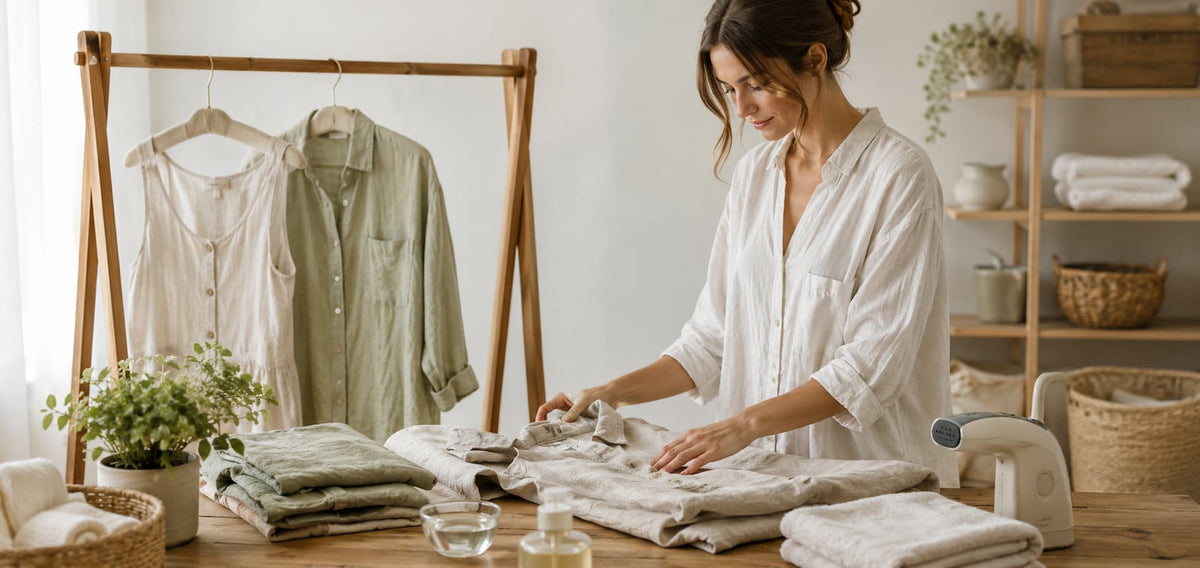
A steamer can also be practical when you only want to soften deeper creases before wearing a dress, blouse, or pair of trousers.
The goal does not have to be perfection. It should simply be the finish you prefer.
8. Do Not Wash Linen More Often Than Necessary
Not every wear requires a full washing cycle.
If a garment is still clean, airing it before returning it to the closet may sometimes be enough. Spot-cleaning a small mark can also prevent an unnecessary full wash when the care instructions allow it.
This is particularly useful for pieces designed to stay in your wardrobe for years - whether that meanscustom designed clothing, a favorite linen dress, orhandmade clothing for women that you reach for every summer.
Less unnecessary washing means less friction, less heat, and less stress on the garment over its lifetime.

9. Store Linen Clean, Dry, and Without Crushing It
Before storing linen for a longer period, make sure the garment is completely clean and dry.
Give dresses, shirts, and tailored pieces enough room so they are not tightly compressed between other clothes. Fold or hang them according to their construction rather than forcing every garment into the same storage method.
Forwomen's tailored clothing, maintaining the intended silhouette may be particularly important, so use a hanger that properly supports the shoulders when the design calls for it.
And do not worry about a few wrinkles when you take linen out again. They are much easier to deal with than damage caused by poor washing or excessive heat.
The Linen Care Routine Worth Remembering
You do not need a long list of special products to keeplinen clothing looking good.
Remember these basics:
-
check the care label first;
-
use a gentle cycle and moderate temperature;
-
choose a mild detergent;
-
treat stains without aggressive scrubbing;
-
avoid excessive spinning and wringing;
-
air-dry whenever practical;
-
use low dryer heat only when the label permits it;
-
iron or steam only when you want a smoother finish;
-
store garments completely dry.
Linen is a fabric that can become softer and more flexible through washing and use when cared for appropriately.
That is part of its appeal.
Whether you invest in a simple linen top,custom designed clothing, or carefully made pieces intended to fit your body for years, proper care does not mean treating your clothes as fragile objects.
It means treating them thoughtfully.
A cooler wash, a gentler cycle, less heat, and a little patience can make the difference between a summer garment you enjoy for one season and one you are happy to reach for year after year.


